Productivity is not about being busy every minute of the day. It is about knowing what matters, using your time intentionally, and creating simple systems that help you make consistent progress.
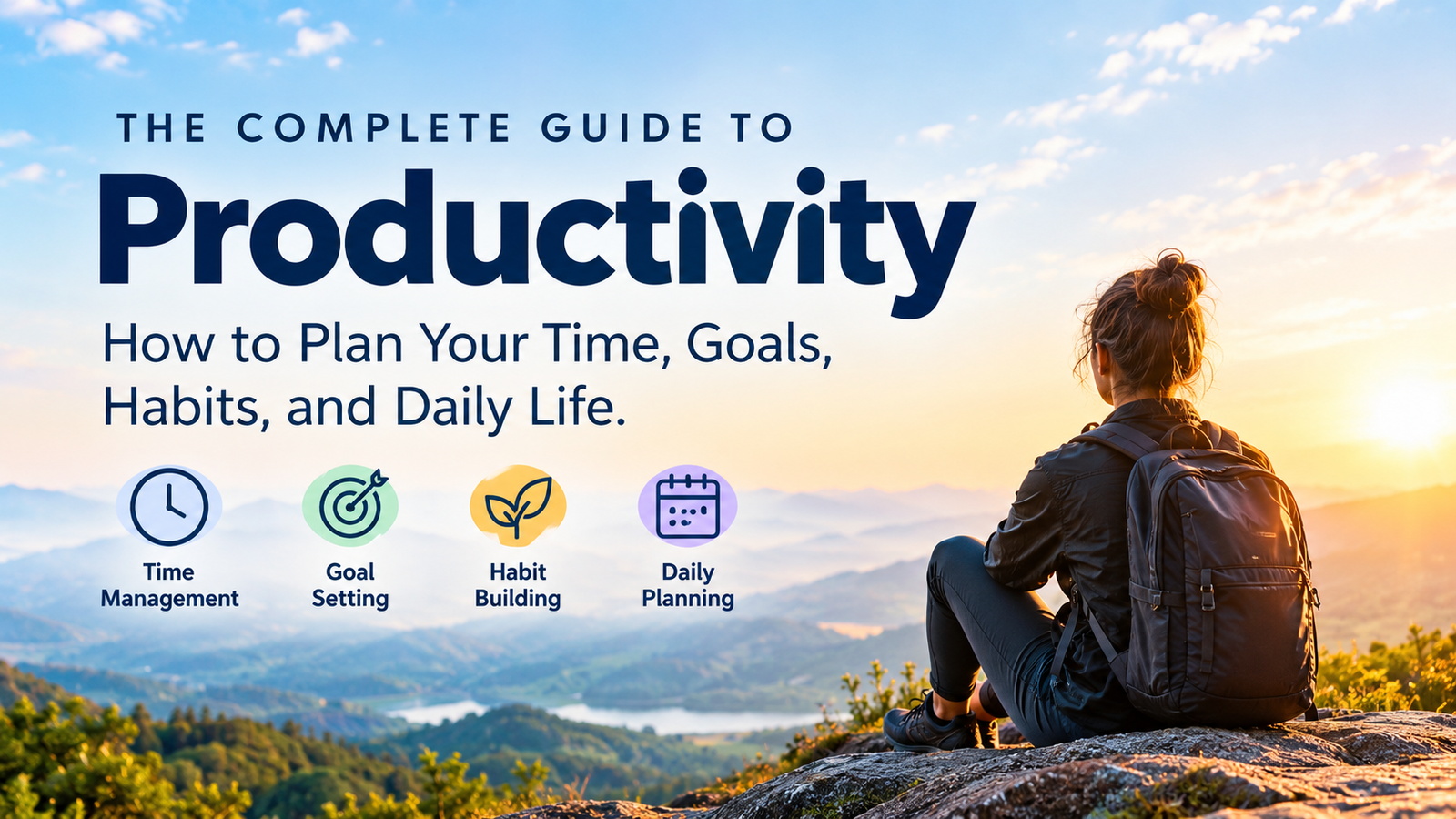
Whether you are a student trying to manage assignments and exams, a professional balancing work and personal responsibilities, an entrepreneur building a business, a creator managing multiple projects, or simply someone who wants more control over daily life, productivity can help you turn scattered tasks into a clear plan.
The problem is that productivity advice is everywhere.
You can find hundreds of productivity apps, morning routines, time management techniques, planners, habit trackers, goal-setting methods, and motivational strategies. The challenge is not finding another productivity tip. The challenge is building a productivity system that actually fits your life and that you can continue using.
This complete guide to productivity brings the essential pieces together.
You will learn how to:
- Plan your time effectively
- Set meaningful and realistic goals
- Break large goals into manageable steps
- Build better habits
- Create an effective daily routine
- Prioritize tasks
- Use time blocking
- Improve focus and concentration
- Stop procrastinating
- Plan your week and month
- Organize your personal and digital life
- Review your progress
- Build a sustainable productivity system
The goal is simple: make productivity practical, flexible, and sustainable.
What Is Productivity?
Productivity is the ability to use your available time, energy, attention, and resources effectively to accomplish meaningful outcomes. Being productive does not necessarily mean completing the largest number of tasks. Imagine two people.
(A) spends ten hours answering messages, checking notifications, attending unnecessary meetings, switching between apps, and working on low-priority tasks.
(B) spends five focused hours completing the most important work and uses the remaining time for exercise, family, rest, learning, and personal responsibilities.
Person B may accomplish more meaningful work despite spending less time working. That is why productivity is better understood as effective progress rather than constant activity.
A useful productivity system should help you answer five questions:
- What am I trying to accomplish?
- Why is it important?
- What should I do first?
- When will I do it?
- How will I know whether I am making progress?
When these questions are clear, planning your day becomes much easier.
Why Productivity Planning Matters
Without a plan, your day can easily become controlled by interruptions. An email arrives, so you respond. A notification appears, so you check it.
Someone asks for help, so you change your priorities. A new idea appears, so you start another project. By the end of the day, you may have been busy for hours without completing the work that matters most. Productivity planning creates direction before distractions arrive.
A good productivity plan can help you:
- Identify your most important priorities
- Manage your time more intentionally
- Reduce mental clutter
- Create realistic schedules
- Protect focused work
- Build consistent habits
- Track progress toward goals
- Reduce unnecessary decision-making
- Make room for rest and personal life
The purpose of planning is not to control every minute. It is to make intentional choices about how you want to use your time.
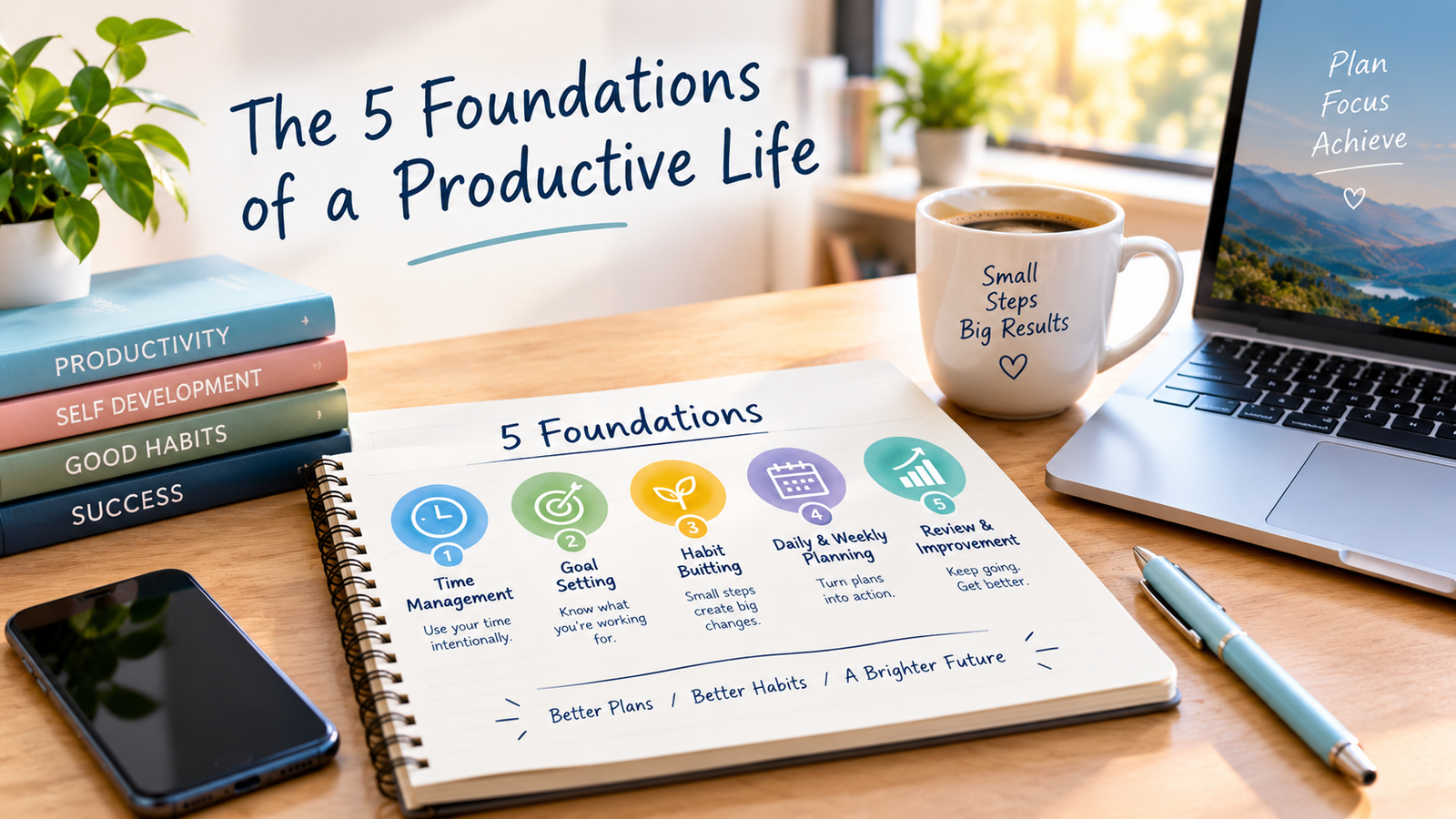
The 5 Foundations of a Productive Life
A sustainable productivity system can be built around five connected foundations:
1. Time Management
Understand where your time goes and decide where it should go.
2. Goal Setting
Define what you want to accomplish and why it matters.
3. Habit Building
Turn important behaviors into repeatable routines.
4. Daily and Weekly Planning
Convert larger goals into specific actions and schedules.
5. Review and Improvement
Regularly evaluate what is working and adjust your system. These five areas work together. Your goals determine direction. Time management determines when you work toward those goals.
Your habits determine what you repeatedly do. Daily planning turns intentions into actions. Your reviews help you improve the system.
1. How to Manage Your Time Effectively
Time is one of the few resources that cannot be stored or recovered. Once a day has passed, you cannot get those hours back. That makes time management one of the most important productivity skills you can develop.
But effective time management does not begin with downloading another app. It begins with understanding how you currently spend your time.
Start With a Time Audit
A time audit is simply a record of how you spend your hours. For three to seven days, track your major activities.
Include:
- Work
- Study
- Meetings
- Social media
- Entertainment
- Exercise
- Household responsibilities
- Family time
- Personal projects
- Sleep
- Commute
- Unplanned activities
You do not need to record every minute perfectly. The purpose is to identify patterns. You might discover that checking social media takes an hour every afternoon. Or that meetings consume most of your most productive working hours. Or that you regularly underestimate how long certain tasks take.
Once you know where your time is going, you can make better decisions.
How to Prioritize Your Time
Not every task deserves equal attention. One of the biggest productivity mistakes is treating every item on a to-do list as equally important. Instead, separate your responsibilities into categories.
Important and Urgent
These tasks require immediate attention.
Examples include:
- Critical deadlines
- Emergencies
- Time-sensitive client work
- Important problems that cannot wait
Important but Not Urgent
These tasks often create the most long-term value.
Examples include:
- Exercise
- Learning
- Planning
- Building a business
- Writing
- Developing skills
- Long-term financial planning
- Spending quality time with family
These tasks are often postponed because they do not feel urgent. That is exactly why they need to be deliberately scheduled.
Urgent but Less Important
These tasks may require attention but may not contribute significantly to your primary goals. Some can be delegated, automated, grouped together, or handled later.
Neither Important nor Urgent
These activities are often candidates for elimination or reduction. The goal is not to eliminate everything that is fun or relaxing.
Entertainment and rest are important. The key is making sure low-value activities do not accidentally consume the time you intended to use for high-value priorities.
2. How to Set Better Goals
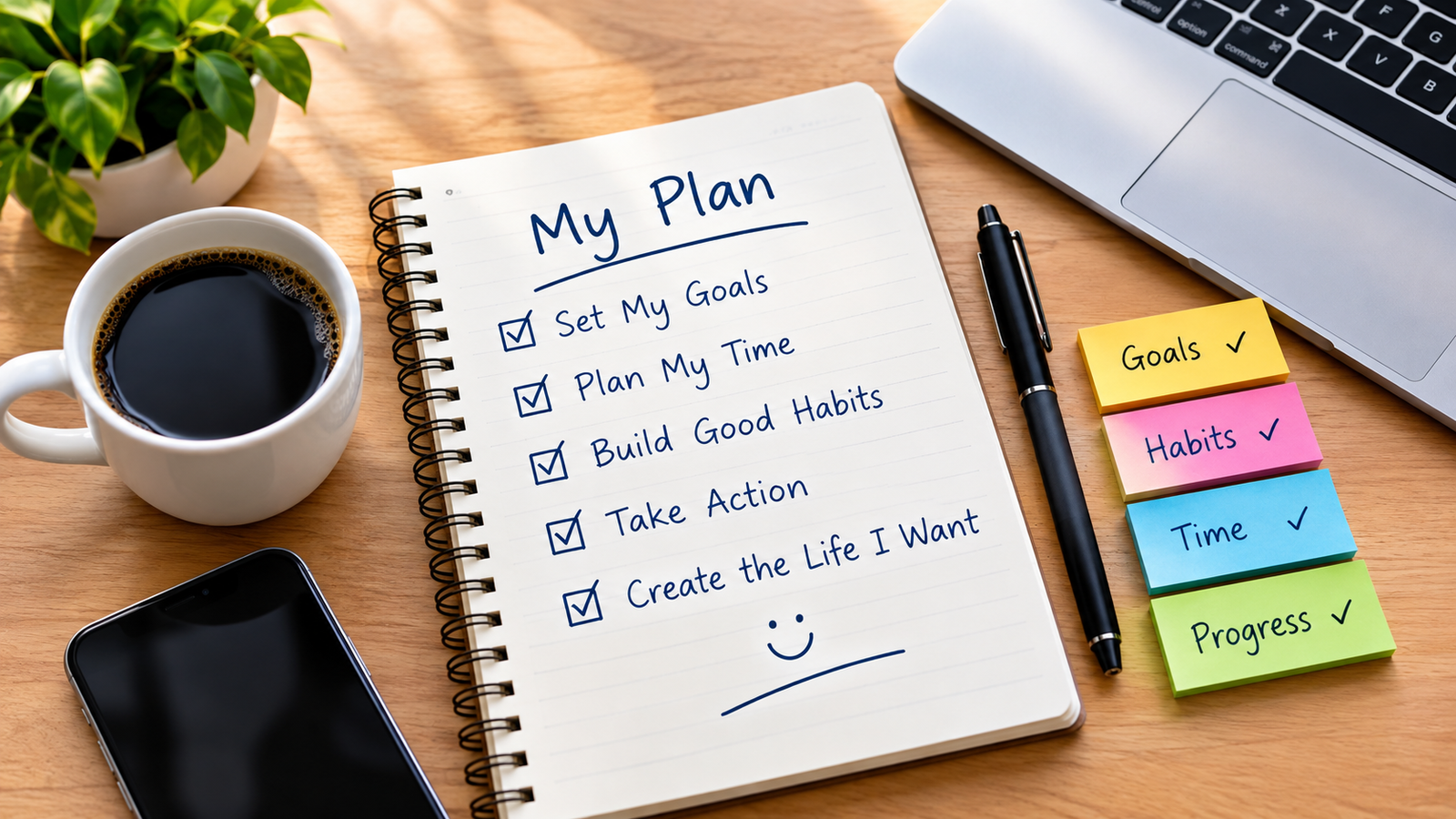
Time management becomes much easier when you know what you are working toward. Goals provide direction.
Without clear goals, it is easy to spend your time reacting to whatever happens during the day. A good goal should eventually become a set of actions.
For example:
“I want to become healthier.”
is an intention.
A more actionable version might be:
“I will walk for 30 minutes at least five days per week for the next three months.”
Now you have something you can schedule and track.
Use the SMART Goal Framework
One widely used framework for goal setting is SMART.
Specific
Clearly define what you want to accomplish.
Measurable
Decide how you will measure progress.
Achievable
Make the goal challenging but realistic.
Relevant
Make sure the goal connects to something that genuinely matters to you.
Time-Bound
Give the goal a specific timeframe.
For example, instead of:
“I want to save more money.”
You could create a measurable target such as:
“I will save $3,000 over the next 12 months by setting aside $250 each month.”
The second version provides a clearer action plan.
Break Large Goals Into Smaller Goals
Big goals can feel overwhelming because the final outcome may be far away.
Instead, create a hierarchy:
Long-term goal → Quarterly goal → Monthly goal → Weekly goal → Daily action
For example:
Long-Term Goal
Launch a successful website.
Monthly Objective
Build the website structure and publish the core pages.
Weekly Objective
Complete the homepage and two supporting pages.
Daily Action
Spend 60 focused minutes writing, editing, or designing. This process turns an abstract goal into something you can act on today.
3. How to Build Better Habits
Goals describe what you want to achieve. Habits describe what you repeatedly do. That distinction is important.
You may have a goal to write a book, exercise regularly, learn a language, or build a business. But the goal itself does not create progress. Your repeated actions do.
Start Small
A common mistake is trying to change your entire life at once.
You may decide to:
- Wake up extremely early
- Exercise every day
- Read dozens of pages
- Meditate
- Work for eight focused hours
- Learn a new skill
- Completely change your diet
- Eliminate all distractions
The plan may look impressive. But if it is difficult to maintain, it will eventually collapse. Instead, begin with one or two small behaviors.
For example:
- Read 10 pages each evening.
- Walk for 20 minutes after lunch.
- Plan tomorrow before going to bed.
- Spend 30 minutes learning a new skill.
- Write for 20 minutes every morning.
Small habits become powerful when they are repeated consistently.
Use Habit Stacking
Habit stacking connects a new behavior to something you already do.
For example:
After I make my morning coffee, I will review my top three priorities.
Or:
After I brush my teeth at night, I will prepare tomorrow’s task list.
Or:
After lunch, I will take a 15-minute walk.
The existing routine becomes a reminder for the new behavior.
This can make habit building feel more natural.
Track Your Habits
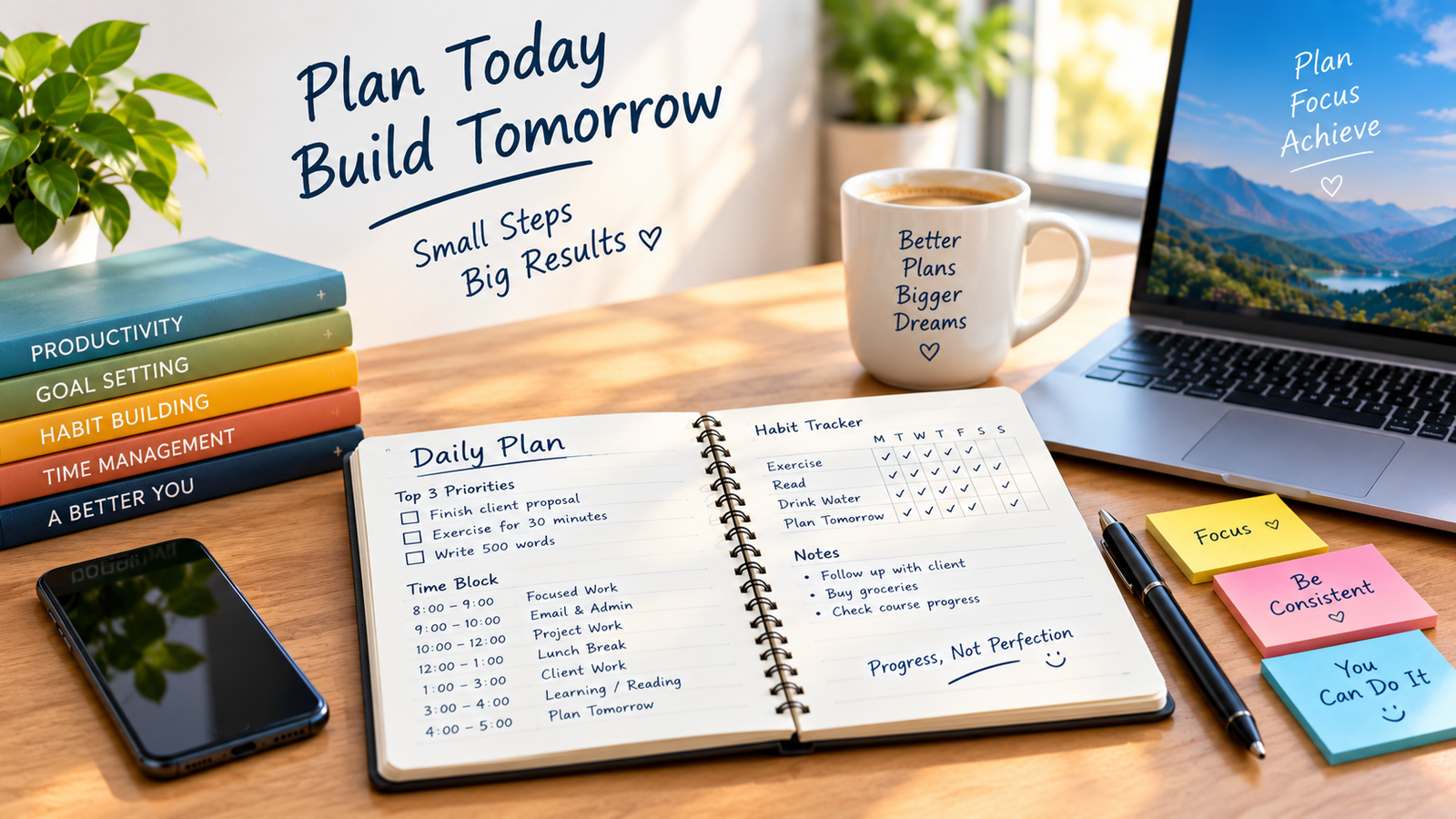
A habit tracker provides a visual record of consistency. You can create a simple weekly tracker:
| Habit | Mon | Tue | Wed | Thu | Fri | Sat | Sun |
|---|---|---|---|---|---|---|---|
| Exercise | ✓ | ✓ | ✓ | ✓ | ✓ | ||
| Reading | ✓ | ✓ | ✓ | ✓ | ✓ | ✓ | |
| Planning | ✓ | ✓ | ✓ | ✓ | ✓ | ✓ | ✓ |
The purpose is not to create a perfect streak. The purpose is awareness. If you repeatedly miss the same habit, that may be useful information.
Perhaps the habit is too ambitious. The timing is wrong. Perhaps you need a better reminder. Use the information to improve the system.
4. How to Create an Effective Daily Plan
Your daily plan is the bridge between your larger goals and your actual life. A useful daily planner should answer:
What matters today?
Choose Your Top Three Priorities
Instead of creating an enormous to-do list, identify three meaningful priorities.
Ask:
“If I could complete only three important things today, what should they be?”
For example:
- Finish the client proposal.
- Exercise for 30 minutes.
- Write 500 words for my next article.
These priorities give your day direction.
Smaller tasks can still be completed, but they should not automatically push your major priorities aside.
Use Time Blocking
Time blocking means assigning a specific period to a specific type of work.
For example:
8:00–9:00 AM: Planning and focused work
9:00–9:30 AM: Email
9:30–11:30 AM: Deep work
11:30–12:00 PM: Break
12:00–1:00 PM: Lunch
1:00–3:00 PM: Client work
3:00–3:30 PM: Administrative tasks
4:00–5:00 PM: Learning or personal projects
The exact schedule will depend on your lifestyle. The important principle is that you decide in advance when important activities will happen.
Don’t Fill Every Minute
One of the biggest planning mistakes is creating a schedule with no breathing room. Unexpected calls happen. Tasks take longer than expected.
Family responsibilities appear. Projects change. If every minute is scheduled, one interruption can destroy your entire day. Leave buffer time between major activities.
A realistic schedule is usually more useful than an ambitious schedule you cannot maintain.
5. How to Plan Your Week
Daily planning helps you manage today. Weekly planning helps you manage direction. A weekly review can take 20–30 minutes.
Choose a consistent day and ask:
- What did I accomplish this week?
- What remains unfinished?
- Why did those tasks remain unfinished?
- What are my most important goals next week?
- What deadlines are approaching?
- What appointments or personal commitments do I have?
- What should I stop doing?
- What should I continue doing?
- What should I change?
Then create your weekly plan.
A Simple Weekly Planning System
Step 1: Review
Look at your previous week.
Step 2: Capture
Write down unfinished tasks, ideas, deadlines, and responsibilities.
Step 3: Prioritize
Choose the items that matter most.
Step 4: Schedule
Put important activities into your calendar.
Step 5: Simplify
Remove or postpone low-value tasks.
Step 6: Prepare
Identify anything you need before the week begins. This simple process can prevent your task list from becoming overwhelming.
6. How to Organize Your Daily Life
Productivity is not limited to professional work. Your environment and personal organization can have a major impact on how easily you can focus.
Organize Your Workspace
Keep frequently used items easy to access. Remove unnecessary clutter. You do not need to create a perfect minimalist workspace.
The goal is to reduce friction. When your workspace is ready, starting an important task becomes easier.
Organize Your Digital Life
Digital clutter can be just as distracting as physical clutter.
Consider organizing:
- Computer files
- Cloud storage
- Browser bookmarks
- Notes
- Calendar
- Mobile apps
- Notifications
Turn off notifications that are not genuinely important. You do not need every application competing for your attention throughout the day.
7. How to Stop Procrastinating
Procrastination is often connected to uncertainty, overwhelm, boredom, perfectionism, or the difficulty of starting. One practical strategy is to make the first step extremely small.
Instead of:
“Write the entire article.”
Try:
“Open the document and write the introduction.”
Instead of:
“Clean the entire house.”
Try:
“Clean one surface for five minutes.”
Instead of:
“Build my business.”
Try:
“Write down three business tasks.”
Starting reduces the psychological resistance to the task.
Use the Five-Minute Rule
Tell yourself:
“I only need to work on this for five minutes.”
After five minutes, you can decide whether to continue.
Often, the hardest part is beginning. Once you are engaged, continuing may feel much easier.
8. How to Improve Focus and Concentration
Modern technology makes distraction extremely easy. Notifications, social media, email, messaging apps, news, and browser tabs can fragment your attention.
Productivity improves when you protect periods of uninterrupted focus.
Create Focus Sessions
Choose one important task. Set a specific period. Remove unnecessary distractions.
For example:
45 minutes focused work + 10 minutes break
During the focus period:
- Silence notifications
- Put your phone away
- Close unrelated tabs
- Avoid checking email
- Work on one major task
- Keep a note nearby for distracting ideas
The goal is not to work without breaks.
The goal is to give your attention to one meaningful task at a time.
9. How to Create a Productive Morning Routine
A morning routine can provide structure at the beginning of your day. But you do not need an extreme routine.
A practical morning routine might include:
- Wake up at a consistent time.
- Drink water.
- Review your priorities.
- Avoid unnecessary phone checking.
- Move your body.
- Prepare for the day.
- Begin your most important task.
Your ideal routine should fit your responsibilities and energy levels. The purpose of a morning routine is not to imitate someone else’s lifestyle. It is to create a reliable start to your own day.
10. Digital Planner vs. Paper Planner
Both digital and paper planning systems can work. The best choice depends on your preferences and lifestyle.
Digital Planners
Digital planning can be useful when you want:
- Easy editing
- Searchability
- Access across devices
- Digital organization
- Flexible templates
- Integration with other digital workflows
Paper Planners
Paper planning can be useful when you prefer:
- Writing by hand
- Fewer digital distractions
- A physical overview
- Simple planning
- A more tactile experience
There is no universal winner. A simple planner that you use consistently is more valuable than a sophisticated system you abandon.
11. How to Build a Productivity System That Lasts
Your productivity system should not become another source of stress. Keep it simple.
A sustainable system might look like this:
Every Morning
- Review your priorities.
- Choose your top three tasks.
- Check your schedule.
- Protect your focused work.
During the Day
- Work in focused blocks.
- Capture new tasks.
- Avoid unnecessary distractions.
- Take appropriate breaks.
Evening
- Review your accomplishments.
- Move unfinished tasks forward.
- Prepare tomorrow’s priorities.
Week
- Review progress.
- Plan upcoming priorities.
- Schedule important activities.
- Remove unnecessary tasks.
Every Month
- Review your major goals.
- Measure progress.
- Identify recurring problems.
- Adjust priorities.
Every Quarter
- Review your larger direction.
- Evaluate what is working.
- Remove outdated goals.
- Define the next major priorities.
This creates a continuous improvement cycle.
12. Common Productivity Mistakes to Avoid
Even a good productivity strategy can become ineffective when it is taken too far.
Trying to Do Everything
You cannot prioritize everything. Choose what matters most.
Creating Unrealistic Schedules
If your plan contains more work than you can realistically complete, the problem may be the plan—not your motivation.
Changing Systems Constantly
You do not need a new productivity method every week. Give your system enough time to become a routine.
Tracking Too Much
Tracking every detail of your life can become exhausting. Track the information that helps you make better decisions.
Ignoring Rest
Rest is part of sustainable productivity. Sleep, exercise, hobbies, relationships, and breaks help create a balanced life. A productivity system should help you live better not simply work more.
13. A Simple Daily Productivity Planner Template
You can turn the principles in this guide into a simple daily planning page.
Today’s Date
Date: __________________
My Top 3 Priorities
Schedule
Morning: ______________________
Afternoon: ____________________
Evening: ______________________
Important Tasks
- __________________________
- __________________________
- __________________________
- __________________________
- __________________________
Today’s Habits
- Exercise
- Reading
- Water
- Focused work
- Planning
- Other: __________________
Notes:
Evening Review
What went well?
What is tomorrow’s most important priority?
A simple template like this can turn productivity theory into an everyday practice.
14. How Goals, Habits, and Time Management Work Together
The real power of productivity comes from connecting these systems. Consider this example.
Goal
Build a successful online business.
Quarterly Objective
Develop the website and publish useful content consistently.
Monthly Objective
Publish four high-quality articles.
Weekly Target
Complete one article.
Daily Habit
Write for 45 minutes every weekday.
Time Block
9:00–9:45 AM. Now a large goal has been converted into a repeatable daily behavior.
This is the foundation of sustainable productivity. You do not achieve meaningful goals through motivation alone. You build systems that make progress easier to repeat.
15. How to Review Your Productivity System
A productivity system should evolve. Your schedule six months from now may look completely different from your schedule today.
That is normal. At the end of each week, ask:
What Worked?
Identify the strategies that helped.
What Did Not Work?
Look for recurring problems.
What Took Too Long?
Your estimates may need adjustment.
What Did I Avoid?
This can reveal tasks that need to be broken into smaller steps.
What Created the Most Value?
Spend more time on activities that support your important goals.
What Can I Remove?
Eliminate unnecessary commitments when possible. The goal of a review is not to criticize yourself. It is to improve your system.
16. Productivity for Different Types of People
Productivity for Students
Students often need to manage:
- Classes
- Assignments
- Exams
- Study sessions
- Personal activities
- Deadlines
A student productivity system can combine a weekly schedule, daily planner, study blocks, assignment tracker, exam calendar, and habit tracker.
Productivity for Entrepreneurs
Entrepreneurs often manage many responsibilities simultaneously.
Useful systems can include:
- Weekly business priorities
- Project planning
- Time blocking
- Content calendars
- Financial tracking
- Client management
- Task prioritization
Productivity for Creators
Creators often need systems for:
- Content ideas
- Writing
- Design
- Publishing
- Social media
- Research
- Analytics
A content planning system can reduce the pressure of deciding what to create every day.
Productivity for Busy Professionals
Professionals often need to balance:
- Meetings
- Deep work
- Communication
- Deadlines
- Projects
- Personal responsibilities
The most important skill may be protecting time for high-value work.
17. Productivity Tools and Templates
A productivity system can be paper-based, digital, or a combination of both.
Useful tools include:
- Daily planners
- Weekly planners
- Monthly planners
- Goal planners
- Habit trackers
- Morning routine planners
- Student planners
- Time-blocking templates
- Content planners
- Digital planning dashboards
- Task management tools
The important question is not:
“Which productivity tool is the most advanced?”
Instead ask:
“Which tool makes it easier for me to consistently do the things that matter?”
Example, a daily planner can help organize priorities and time blocks, while a habit tracker can help make recurring behaviors visible.
For students, a dedicated planner can combine goals, schedules, habits, assignments, exams, and progress in one system.
For creators and business owners, a content planner can help organize ideas, publishing dates, platforms, and content workflows.
The right tool should reduce friction rather than create another complicated process.
18. The Ultimate Productivity Checklist
Use this checklist to build or improve your own productivity system.
Goals
- I know what I am working toward.
- My goals are specific enough to act on.
- I have broken large goals into smaller objectives.
Time
- I understand where my time goes.
- I know my highest-priority activities.
- I have scheduled important work.
Daily Planning
- I choose my top priorities.
- I use realistic schedules.
- I leave room for unexpected events.
Habits
- I have identified a few important habits.
- My habits are small enough to maintain.
- I track important habits when useful.
Focus
- I protect focused work periods.
- I reduce unnecessary notifications.
- I avoid unnecessary multitasking.
Weekly Review
- I review my progress.
- I identify unfinished work.
- I plan the upcoming week.
- I remove low-value tasks.
Personal Life
- I make time for rest.
- I make time for relationships.
- I make time for health and personal interests.
Frequently Asked Questions About Productivity
Start with a simple system. Define your priorities, choose your most important daily tasks, schedule focused work, build a few useful habits, and review your progress regularly. You do not need to change everything at once.
Start by checking your larger goals and schedule. Choose your top three priorities, assign realistic time blocks, and leave some space for unexpected responsibilities.
There is no universal number, but starting with three major priorities can make your day easier to manage. You can then add smaller tasks around them.
Time management focuses on how you allocate your available time. Productivity is broader and includes how you use your time, attention, energy, priorities, habits, and systems to create meaningful results.
Break the task into a very small first step. Instead of trying to finish everything immediately, focus on starting for five minutes. Reducing the size of the first action can make difficult tasks feel more manageable.
Time blocking is a planning method where you assign specific periods of your day to particular activities or categories of work. It can help protect focused work and reduce constant task switching.
A planner can be useful if it helps you organize priorities, schedules, goals, habits, and tasks consistently. The value comes from using the system, not from the planner itself.
Neither is automatically better. Digital planning offers flexibility and searchability, while paper planning can reduce screen distractions and provide a physical planning experience. Choose the format that fits your workflow.
A weekly review is useful for short-term progress, while monthly and quarterly reviews can help you evaluate larger goals. Your review frequency can change depending on the complexity of your goals.
A clear planning system can reduce uncertainty and mental clutter by giving you a place to organize tasks, deadlines, priorities, and goals. However, productivity should not mean filling every minute with work. Rest and recovery are important parts of a sustainable system.
Final Thoughts: Build a Productivity System That Works for You
Productivity is not about squeezing more tasks into every hour. It is about making intentional decisions about your time, attention, energy, and priorities.
The most effective productivity system is usually not the most complicated one. It is the one you can understand, use, review, and improve consistently.
Start with the fundamentals:
- Define meaningful goals.
- Break large goals into smaller actions.
- Plan your time.
- Prioritize what matters.
- Build small and sustainable habits.
- Protect your focus.
- Organize your daily environment.
- Review your progress.
- Adjust your system when your life changes.
- Make room for rest and personal life.
Remember that productivity is a process. Some days will go according to plan. Other days will not.
You will occasionally miss a habit, postpone a task, underestimate a project, or lose focus. That does not mean your productivity system has failed.
The important thing is to review what happened, make a useful adjustment, and continue. A planner, habit tracker, time-blocking template, digital dashboard, or other productivity tool can help you turn your intentions into a practical routine, but the tool is only part of the system.
Your goals provide the direction.
Habits create consistency.
Schedule creates structure.
Your daily actions create progress.
Build a system that supports the life you actually want to live. Start small. Plan intentionally. Focus on what matters. And improve your system one day at a time.
“These productivity strategies aren’t just for the office they are a lifesaver for organizing big personal events and holidays, too. See how you can apply these exact tactics for a stress-free holiday in our [Ultimate Christmas Planning Guide].”
Explore More Productivity Resources
Once you have built the foundation of your productivity system, continue learning through related guides on:
- Daily planning
- Weekly planning
- Time management
- Goal setting
- Habit tracking
- Morning routines
- Focus and concentration
- Procrastination
- Student productivity
- Content planning
- Digital planners
- Printable planners
These supporting resources can help you go deeper into specific areas of productivity without overwhelming your main system.
If you prefer a ready-to-use approach, explore productivity planners, habit trackers, daily planning templates, student planning tools, and other digital resources designed to make organization easier.
Your productivity system should work for your life not become another task on your to-do list.