That is where a Christmas Budget Planner can make a real difference. Christmas is supposed to be a season of joy, generosity, and time with the people you love. But without a clear plan, holiday spending can quickly get out of control.
Gifts, groceries, decorations, travel, Christmas parties, wrapping supplies, activities, and last-minute purchases can all add up. Before you know it, your Christmas budget is gone, and January arrives with a pile of expenses you did not plan for.
Instead of keeping gift ideas in one note, expenses in a spreadsheet, shopping lists on your phone, and Christmas plans in your head, a dedicated budget planner gives you one organized system for managing your holiday spending.
In this guide, you’ll learn how to create a realistic Christmas budget, divide it into useful categories, track your spending, avoid common holiday budgeting mistakes, and use a Christmas Budget Planner to make the entire process easier.
What Is a Christmas Budget Planner?
A Christmas Budget Planner is a tool that helps you plan and manage the money you expect to spend during the holiday season.
Rather than looking only at gift expenses, a good Christmas budget should consider the entire cost of Christmas.
That may include:
- Christmas gifts
- Stocking stuffers
- Food and groceries
- Christmas dinner
- Decorations
- Christmas cards
- Gift wrapping
- Travel
- Parties and hosting
- Family activities
- Entertainment
- Charitable giving
- Unexpected expenses
The goal isn’t to spend as little as possible. The goal is to decide where your money should go before you start spending it.
When you have a spending limit for each category, it becomes much easier to make confident purchasing decisions and recognize when you’re getting close to your limit.
Why You Need a Christmas Budget
Holiday spending can feel different from normal spending. There are more sales, more social events, more gift-buying opportunities, and more reasons to say, “It’s Christmas.”
That can make small purchases feel harmless. A $20 gift here, a $35 decoration there, an extra grocery trip, another online order and suddenly you’ve spent hundreds of dollars more than expected.
A Christmas budget creates a boundary around your spending.
Instead of asking:
“Can I afford this?”
you can ask:
“Does this fit into the Christmas budget I already created?”
That small change in thinking can help reduce impulse purchases and make holiday spending much more intentional.
How to Create a Christmas Budget Step by Step
Creating your holiday budget doesn’t have to be complicated.
You can start with these simple steps.
1. Decide Your Total Christmas Budget
Start with the most important number:
How much can you realistically spend on Christmas this year?
Look at the money you can comfortably dedicate to the holiday season without compromising essential bills, savings goals, or other financial obligations.
For example, suppose your total Christmas budget is $1,200.
That $1,200 needs to cover more than presents.
Your next step is to divide it into categories.
2. Create Christmas Budget Categories
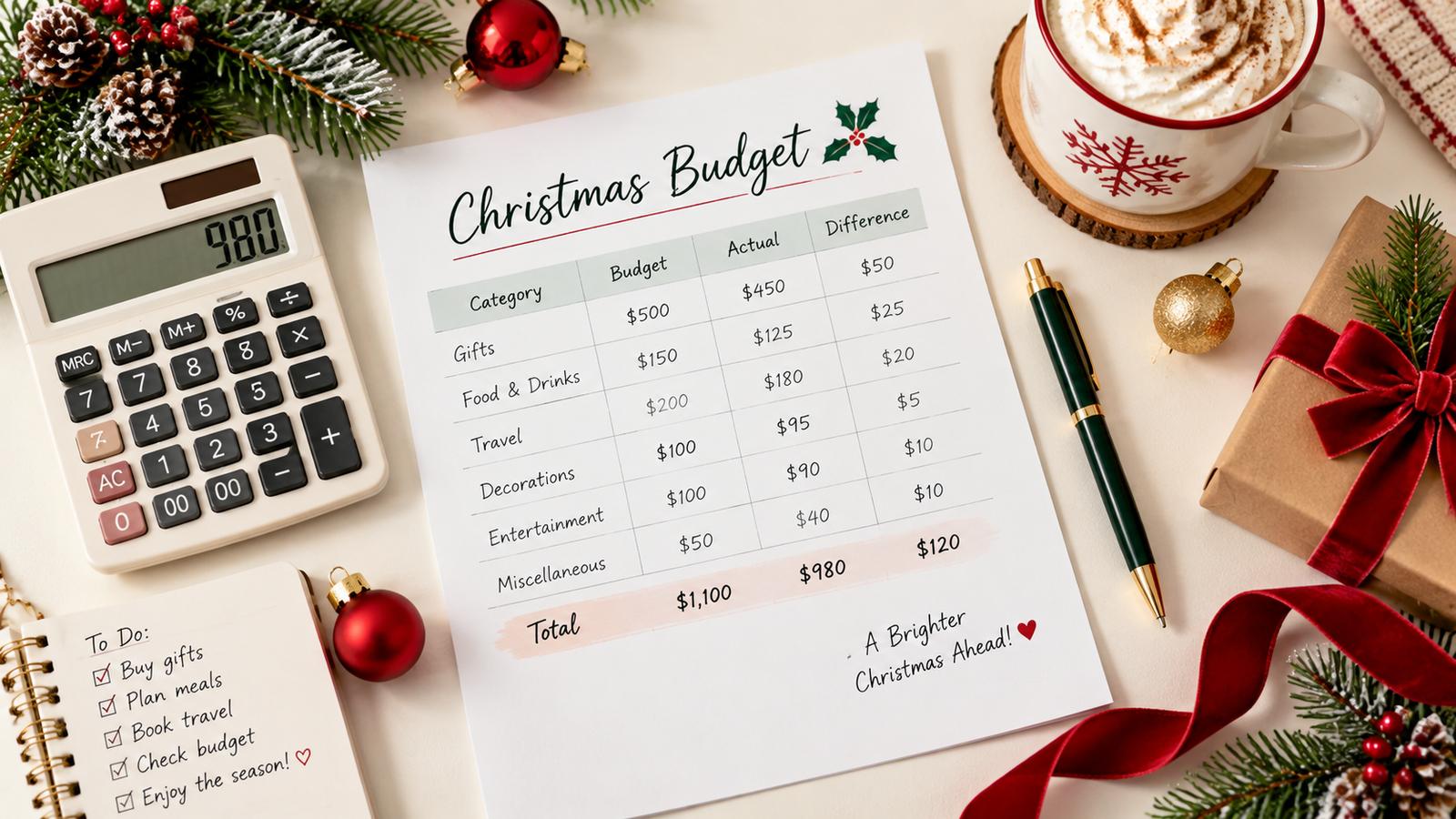
A category-based budget makes your spending easier to understand.
For example:
| Christmas Category | Example Budget |
|---|---|
| Gifts | $500 |
| Food & Groceries | $200 |
| Decorations | $100 |
| Travel | $150 |
| Parties & Events | $100 |
| Wrapping & Cards | $50 |
| Activities | $50 |
| Miscellaneous | $50 |
| Total | $1,200 |
These numbers are only an example. Your categories and amounts should reflect your own Christmas plans.
The important part is that every major holiday expense has somewhere to go.
3. Set a Gift Budget for Each Person
Gift spending can easily become the biggest part of a Christmas budget.
Instead of choosing gifts first and thinking about the cost afterward, decide how much you want to spend on each person.
For example:
| Recipient | Gift Budget |
|---|---|
| Partner | $150 |
| Child 1 | $100 |
| Child 2 | $100 |
| Parents | $75 |
| Sibling | $50 |
| Friends | $75 |
| Coworkers | $50 |
This gives you a spending ceiling before you start shopping. You can then look for gift ideas that fit the amount you have already allocated.
Don’t Forget the “Small” Christmas Expenses
One of the biggest Christmas budgeting mistakes is planning only for gifts. The smaller expenses can add up surprisingly quickly.
Think about:
- Wrapping paper
- Gift bags
- Ribbons
- Christmas cards
- Postage
- Baking ingredients
- Snacks
- Drinks
- Decorations
- Batteries
- Stocking stuffers
- Holiday activities
- Parking
- Gas
- Delivery fees
These expenses may individually seem insignificant, but together they can create a meaningful hole in your holiday budget.
A good Christmas spending tracker should make it easy to record these purchases as they happen.
4. Plan Your Christmas Food Budget
Food is another category that deserves its own budget.
If you’re hosting Christmas dinner, estimate the cost of:
- Main dishes
- Side dishes
- Vegetables
- Desserts
- Drinks
- Appetizers
- Snacks
- Baking ingredients
- Breakfast food
- Extra groceries for guests
Start with your Christmas menu, then turn the menu into a grocery list.This gives you a much better idea of what Christmas food will actually cost.
It also reduces the chance of making several unnecessary last-minute grocery trips.
5. Include Christmas Travel
If you’re visiting family or traveling during the holidays, transportation can become a significant expense.
Depending on your plans, consider:
- Gas
- Flights
- Train tickets
- Bus tickets
- Parking
- Rental cars
- Hotels
- Tolls
- Food while traveling
Add these costs to your Christmas budget before you start making travel arrangements.
If travel is not included in your original budget, you may need to reduce another category rather than simply increasing your total spending.
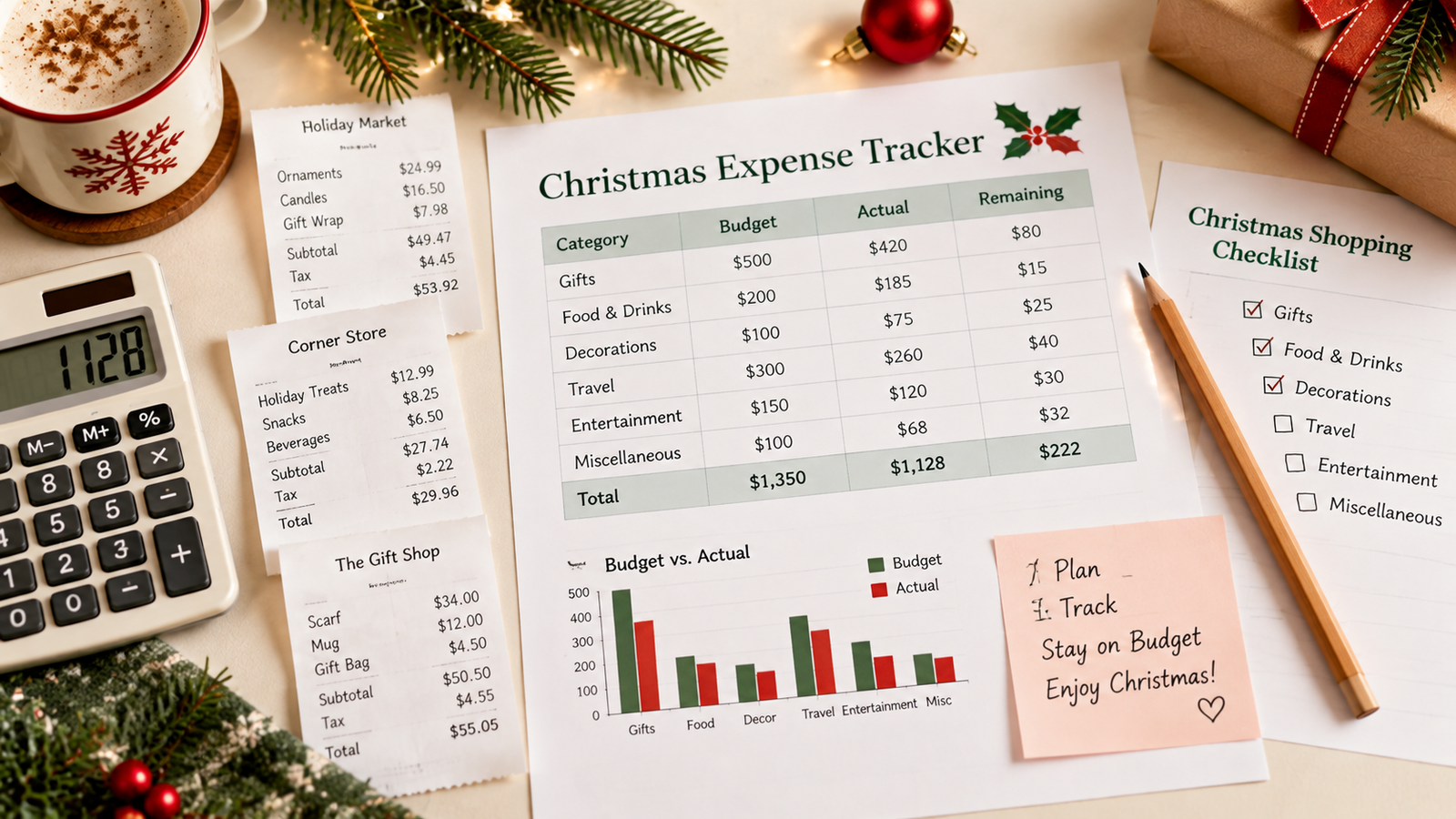
6. Track Your Actual Christmas Spending
Creating a budget is only half the process. You also need to track what you actually spend.
For example, you might budget:
Gifts: $500
But after a few shopping trips, your actual spending might be:
Gifts: $427
That means you have:
$73 remaining
Seeing that number in real time is much more useful than trying to remember your spending from receipts, emails, bank statements, and shopping apps.
A good Christmas expense tracker should show the difference between your planned budget and your actual spending.
Budget vs. Actual: The Number That Matters
One of the most useful ways to evaluate your Christmas spending is to compare:
Budget − Actual Spending = Remaining Budget
For example:
- Christmas food budget: $200
- Actual spending: $165
- Remaining: $35
You can then decide whether to leave that $35 unused, move it to another category, or use it for an additional planned expense.
This gives you control instead of letting holiday spending happen randomly.
7. Use a Christmas Gift Tracker
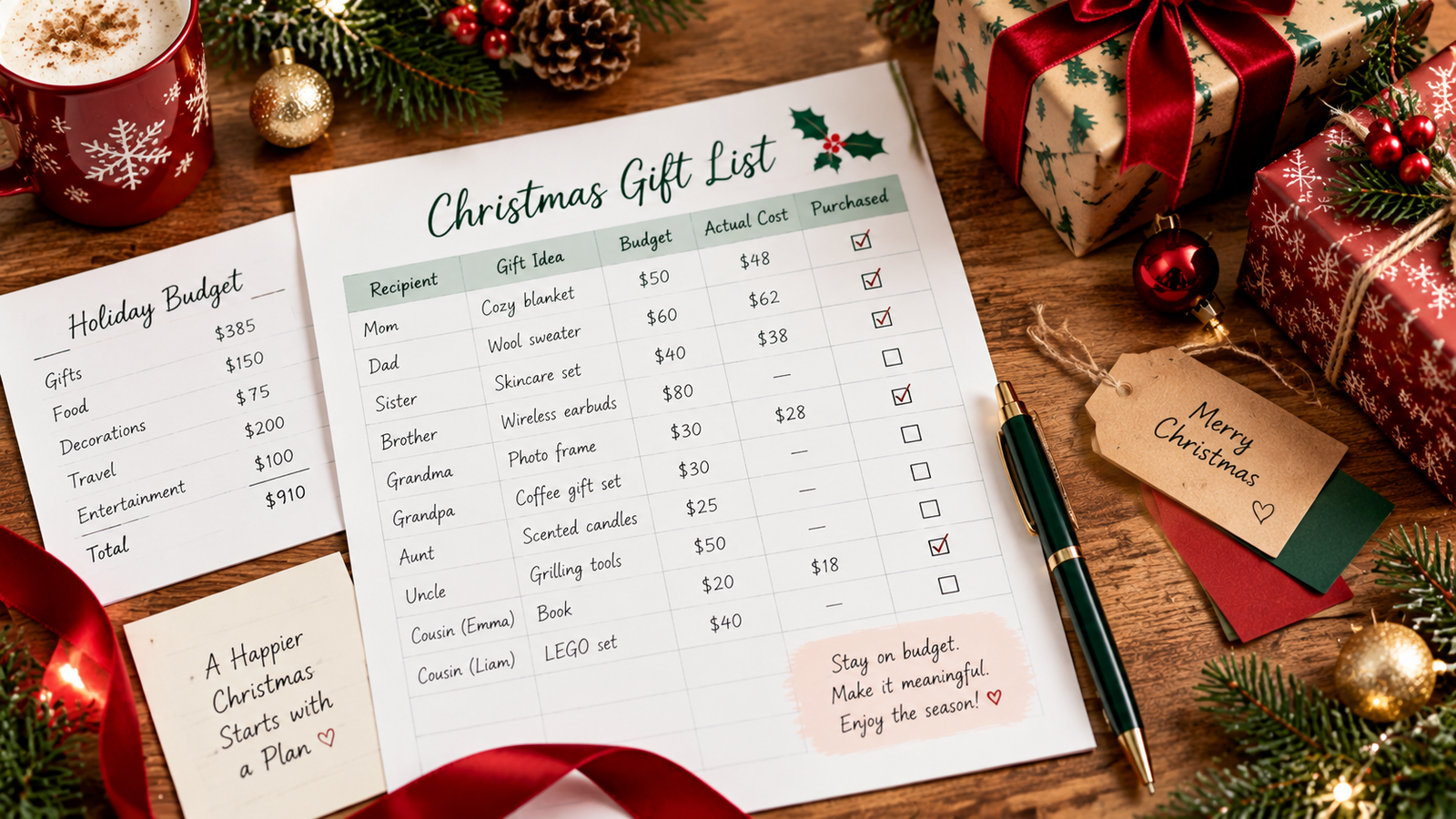
Your Christmas budget and gift list work better together.
A gift tracker can help you record:
- Recipient
- Gift idea
- Target budget
- Actual price
- Store
- Purchase status
- Wrapping status
- Delivery status
For example:
| Person | Gift | Budget | Actual | Status |
|---|---|---|---|---|
| Sarah | Book set | $30 | $27 | Purchased |
| Mike | Headphones | $80 | $75 | Purchased |
| Mom | Sweater | $60 | — | To Buy |
This gives you a quick overview of what you’ve bought, what you still need, and whether you’re staying within your gift budget.
8. Avoid Last-Minute Christmas Spending
Last-minute shopping is one of the easiest ways to break a holiday budget. When Christmas gets closer, people often become more willing to pay extra for convenience.
You may:
- Buy a more expensive gift because your first choice is unavailable
- Pay for faster shipping
- Purchase decorations you forgot
- Make additional grocery trips
- Buy gifts without comparing prices
- Spend more simply because you’re running out of time
A Christmas planning system helps you identify unfinished tasks early. The earlier you know what still needs to be purchased, the more options you have.
9. Leave Room for Unexpected Expenses
Don’t allocate every single dollar of your Christmas budget. Consider creating a small Christmas miscellaneous or emergency category.
For example, with a $1,200 holiday budget, you might reserve $50–$100 for unexpected expenses. That money could cover something you didn’t anticipate, such as an additional gift, forgotten supplies, delivery costs, or an extra family activity.
Having a buffer is much better than discovering that one unexpected expense has pushed your entire Christmas budget over the limit.
10. Make Christmas Planning Easier With One Central Planner
At this point, you can probably see the problem with using several disconnected tools.
You might have:
- A spreadsheet for your budget
- Notes for gift ideas
- A phone checklist for shopping
- A calendar for events
- Another note for groceries
- Receipts in your email
- A separate list for decorations
It works but it isn’t exactly simple. A centralized Christmas planner can bring these pieces together.
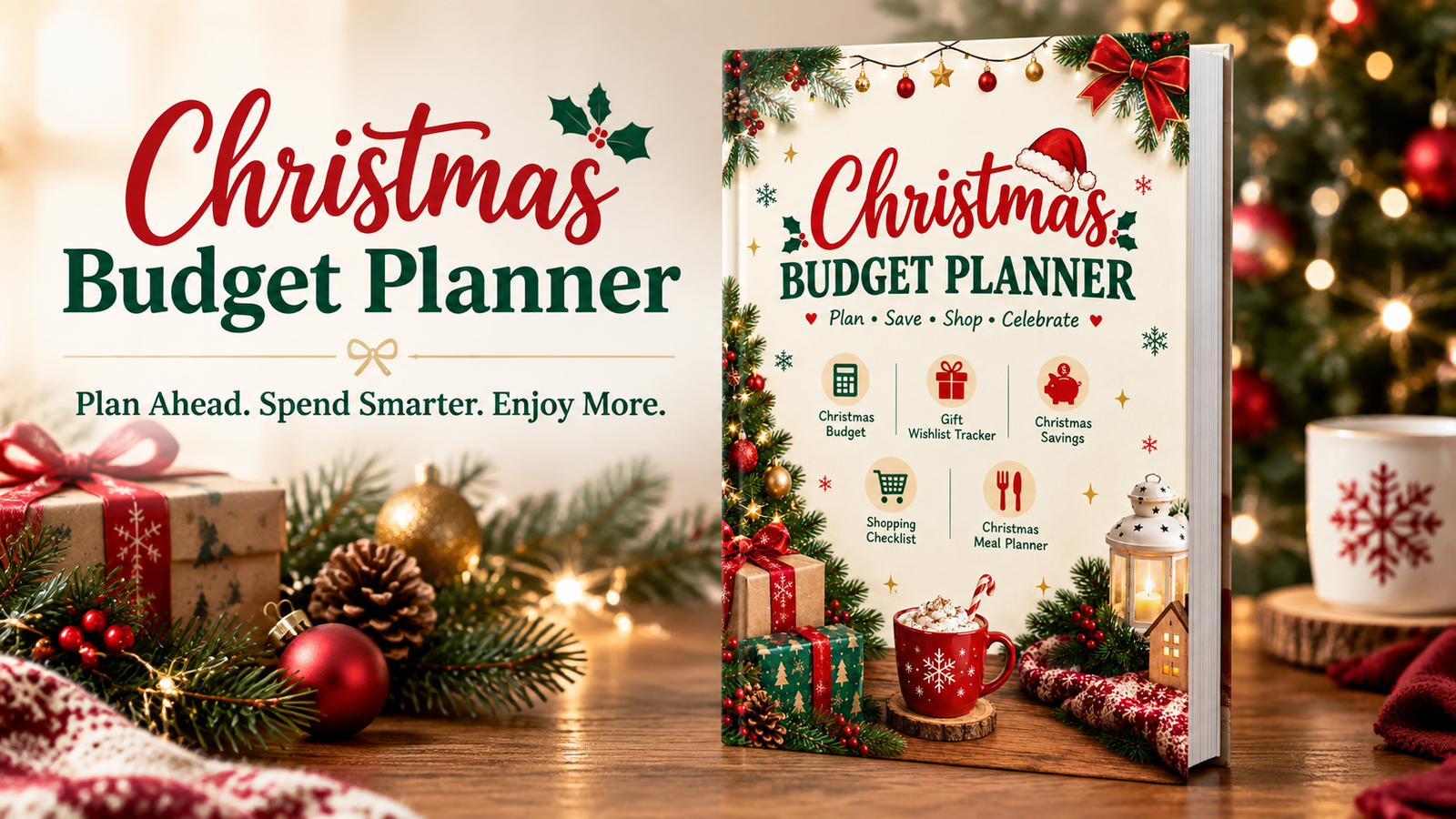
Our Christmas Budget Planner & Gift Tracker Web App is designed specifically for this purpose. It combines holiday budgeting, gift tracking, shopping, expenses, meals, events, wishlists, recipients, decorations, and reports in one browser-based dashboard.
What Can You Manage With the Christmas Budget Planner?
The planner includes dedicated sections for:
Budget:
Set your overall Christmas spending limit, allocate category budgets, and monitor planned versus actual spending.
Gifts:
Track recipients, gift ideas, budgets, actual costs, and purchase status.
Wishlist:
Save gift ideas before deciding what you actually want to buy.
Recipients:
Keep your family, friends, coworkers, neighbors, and other gift recipients organized.
Shopping:
Create and manage a Christmas shopping checklist and organize purchases by store or website.
Expenses:
Record holiday expenses with details such as date, category, amount, and payment method.
Meal Planner:
Plan Christmas meals and keep track of ingredients and grocery needs.
Event Planner:
Organize Christmas parties, family gatherings, Secret Santa events, and other holiday activities.
Decoration Checklist:
Track Christmas decorating tasks so important preparation doesn’t get forgotten.
Reports:
Review visual summaries of your budget versus actual spending and category breakdowns.
The app is also designed to work directly in a browser without requiring an app installation or recurring subscription, and its data is stored locally in the browser.
Why Use a Digital Christmas Budget Planner?
A digital planner can be particularly useful if you want your holiday budget available while you’re shopping.
Instead of carrying a notebook or trying to remember your remaining budget, you can check your planner from your phone, tablet, or computer.
The Christmas Budget Planner also performs calculations automatically and can provide visual warnings when spending moves over an allocated category budget. That means less manual calculation and fewer opportunities to lose track of your spending.
A Simple Christmas Budget Example
Let’s say your household has $1,500 available for Christmas.
You could create a plan like this:
| Category | Budget |
|---|---|
| Gifts | $650 |
| Food & Groceries | $250 |
| Travel | $200 |
| Decorations | $100 |
| Events & Activities | $100 |
| Cards & Wrapping | $50 |
| Miscellaneous | $75 |
| Christmas Buffer | $75 |
| Total | $1,500 |
Now imagine that your gift spending reaches $700. You’re $50 over your gift budget.
Instead of ignoring it, you can immediately see the problem and decide whether to:
- Reduce another planned expense
- Choose a less expensive remaining gift
- Use part of your miscellaneous budget
- Increase the overall budget only if you can genuinely afford it
The important thing is that the decision happens before the overspending becomes invisible.
Christmas Budgeting Tips That Can Save You Money
Shop With a List
Don’t browse holiday sales without knowing what you’re looking for. A list gives you a reason to buy and a reason not to buy.
Set Per-Person Limits
A specific gift budget is easier to follow than a vague goal such as “don’t spend too much.”
Track Purchases Immediately
Don’t wait until the end of the week to enter expenses. Record them while they’re fresh.
Watch the Total, Not Just Individual Purchases
A $15 purchase doesn’t seem significant. Ten $15 purchases equal $150.
Your total Christmas spending matters more than whether each individual purchase feels affordable.
Start Early
Starting early gives you more time to compare prices, take advantage of planned sales, and avoid expensive last-minute purchases.
Keep a Buffer
Unexpected expenses are normal during Christmas. A small buffer can prevent one surprise expense from disrupting the entire budget.
Review Your Budget Before Buying
Before clicking “Buy Now,” check whether the purchase fits the category and the overall Christmas budget.
Christmas Budget Planner Checklist
Before you start Christmas shopping, make sure you’ve completed these steps:
- ☐ Set your total Christmas budget
- ☐ Create spending categories
- ☐ Set a gift budget
- ☐ Create a Christmas gift list
- ☐ Set a budget for each recipient
- ☐ Plan your Christmas meals
- ☐ Estimate grocery costs
- ☐ Calculate Christmas travel expenses
- ☐ Budget for decorations
- ☐ Plan parties and activities
- ☐ Include wrapping and cards
- ☐ Create a miscellaneous buffer
- ☐ Track every Christmas purchase
- ☐ Review budget versus actual spending
- ☐ Check remaining budget before additional purchases
If you can complete these steps before the busiest part of the holiday season, you’ll have a much clearer picture of where your money is going.
How This Fits Into Your Complete Christmas Plan
Budgeting is only one part of a successful Christmas.
Once your finances are organized, you still need to think about gifts, shopping, meals, decorations, family activities, events, and all the small tasks that make the holiday run smoothly.
That’s why we’ve also created the Ultimate Christmas Planning Guide, which brings those different areas of Christmas preparation together in one comprehensive resource.
Read the full guide: The Ultimate Christmas Planning Guide: Budget, Gifts & More
Use the guide for the big-picture Christmas plan, and use a Christmas Budget Planner to keep your holiday spending organized while you work through it.
Ready to Take Control of Your Christmas Budget?
Christmas budgeting doesn’t need to take the joy out of the holiday. In fact, the opposite can happen.
When you know how much you can spend, where your money is going, which gifts you still need to buy, and how much budget remains, you can make decisions with much less stress.
Instead of wondering where your Christmas money went, you can see it. Instead of keeping five different lists, you can organize your holiday information in one place.
And instead of discovering your overspending in January, you can catch it while there’s still time to adjust.
If you want a simple way to manage your Christmas budget, gifts, shopping, expenses, meals, events, and decorations, the Christmas Budget Planner & Gift Tracker Web App is built to bring all of those pieces together.
Plan your spending. Track your gifts. Organize your holiday. Enjoy Christmas with less financial stress.
Explore the Christmas Budget Planner & Gift Tracker
Frequently Asked Questions
Start by deciding your total affordable Christmas spending limit, then divide it into categories such as gifts, food, travel, decorations, events, and miscellaneous expenses. Track actual spending against each category throughout the season.
There is no universal amount that works for everyone. Your gift budget should be based on what you can comfortably afford after considering your other holiday expenses and financial priorities.
A complete Christmas budget can include gifts, food, travel, decorations, parties, activities, cards, wrapping supplies, charitable giving, and unexpected expenses.
Use a Christmas spending tracker and record purchases as soon as you make them. Organize expenses by category and regularly compare actual spending with your planned budget.
Yes. A dedicated planner can combine gift budgets, recipients, gift ideas, purchase status, and actual costs so you can see what has been purchased and what still needs attention.
It depends on your preferences. A spreadsheet can work well if you enjoy building your own system. A dedicated Christmas Budget Planner can be more convenient if you want holiday-specific sections for gifts, shopping, expenses, meals, events, decorations, and reports without building everything yourself.