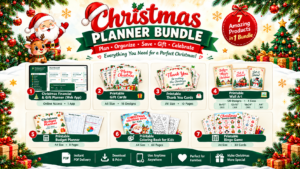
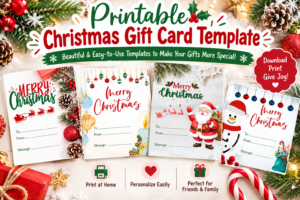
A few years ago, a friend of mine spent a weekend putting together a simple digital planner in Canva for Passive Income. It wasn’t anything revolutionary. She made a clean, useful planner, listed it for $9 on Etsy, and then moved on to other things. For the next couple of months, she barely thought about it.

When she eventually checked her sales dashboard, she’d made roughly $340. Was $340 enough to change her life? Obviously not. But it did something more important: it changed the way she thought about income.
She had spent the time once. The product was still available. Someone could find it, buy it, and download it without her sitting at her computer for every sale. That’s the basic appeal of passive income.
Unfortunately, the internet has turned the idea into something much more glamorous than it really is. You see headlines promising income while you sleep, automated businesses that supposedly require no work, and people claiming they built a passive income stream in a weekend.
I’ve been around online business and content long enough to know that there’s usually a missing part in those stories.
Almost nothing is passive when you start. The work simply happens earlier. You create the product. You build the website. You write the content. You invest the money. You build the audience. You figure out what people actually want.
Then, if you’ve built the right thing and there’s continued demand for it, the amount of work required to keep earning from it can become much smaller. That’s the version of passive income worth talking about.
In this guide, we’ll look at 15 practical passive income ideas, what they actually involve, how much work they typically require, and which options make the most sense depending on your skills, budget, and available time.
What Is Passive Income?
The simplest passive income definition is money you continue earning from an asset, product, investment, or system without having to exchange your time directly for every dollar you earn.
A traditional job is a straightforward example of active income. You work for a certain number of hours and receive a paycheck in return. Passive income works differently.
You might write an e-book once and continue selling it. You might build a useful website that earns from advertising or affiliate commissions. You might invest in dividend-paying stocks and receive distributions from your investments.
But there’s an important distinction that gets lost in a lot of online discussions. Passive doesn’t mean effortless.
Writing a useful e-book can take weeks. Building a blog that attracts search traffic can take months or even years. Creating a course requires planning, recording, editing, and marketing. Buying a rental property requires capital and ongoing management. Even dividend investing requires money to begin with.
So when someone asks, “What is passive income?” I’d describe it as front-loaded work or capital that has the potential to produce income repeatedly with less ongoing effort.
That’s a much more useful definition than “money while you sleep.” Think of it as deferred effort. You do more work today so that the income doesn’t require the same amount of work tomorrow.
15 Passive Income Ideas Worth Considering
There isn’t one perfect passive income idea for everyone. Your best option depends heavily on what you already know, how much money you have available, how much time you can invest, and whether you prefer creating things, investing money, or building an audience.
Here are 15 options worth considering.
1. Digital Products
Digital products are one of the first options I’d consider if you’re starting with relatively little money. The basic model is simple: create something useful once and sell copies of it repeatedly.
That could be a budget spreadsheet, fitness planner, resume template, business checklist, Notion template, social media template, or another digital resource that solves a specific problem.
The attractive part is the economics. There’s no physical inventory, no warehouse, and no shipping. Once the product is created, selling an additional copy doesn’t require you to manufacture another physical item.
But don’t make the mistake of thinking that creating anything digital will work.
The market is crowded. A generic “daily planner” has to compete with thousands of other planners. A product designed around a very specific problem has a much better chance of standing out.
For example, instead of creating another general budget planner, you might create a budget system specifically for freelancers with irregular monthly income.
That’s the kind of positioning I’d look for. Digital products are particularly attractive for beginners because the financial risk can be very low. Your biggest investment is usually your time.
2. E-books
E-books have been around for years, and despite all the changes in online publishing, the basic business model still works. You research a topic, write a useful book, publish it, and continue selling it through a marketplace or your own website.
The mistake is assuming that an e-book needs to be 300 pages long to be valuable. It doesn’t.
A focused 60-page guide that solves a specific problem can be more useful than a 250-page book filled with general information. If I were creating an e-book today, I’d start with the problem rather than the book.
Ask:
What specific problem does someone have that they’re already trying to solve?
Then build the book around that. The downside is that writing a genuinely useful book takes time. And unless you already have an audience, sales may be slow at first.
That’s normal. An e-book can become a long-term asset, but it shouldn’t be treated like a lottery ticket.
3. Printable Products
Printables are another relatively inexpensive way to experiment with digital income. Planners, checklists, worksheets, calendars, wall art, trackers, and educational resources are all examples.
They’re especially appealing to people who have some design ability but don’t necessarily want to write a full book or build software. Platforms such as Etsy have made this business model accessible to almost anyone with a computer and a design tool.
But there’s a catch. Low barriers to entry also mean lots of competition. If anyone can create a printable in Canva in an afternoon, you can expect plenty of other people to do exactly that.
The difference usually comes down to research, presentation, usability, and niche selection. I’d rather create ten highly targeted printables for a clearly defined audience than upload 100 random designs and hope something sells.
And don’t expect immediate results. It can take time for a new shop to build visibility and customer trust.
4. Affiliate Marketing
Affiliate marketing is often described as one of the easiest ways to make passive income online. The basic idea is straightforward.
You recommend a product or service using a special tracking link. If someone purchases through your link, you receive a commission. The complicated part isn’t the link.
It’s getting the right people to see it. An affiliate link sitting on an empty website isn’t worth much. You need traffic, trust, or an audience.
That traffic might come from a blog, YouTube channel, Pinterest, email newsletter, social media account, or another platform. This is why I generally think of affiliate marketing as a monetization method rather than a complete business model by itself.
Build useful content first. Help people make decisions. Recommend products that genuinely fit what they’re looking for. The commissions come afterward.
The best affiliate sites I’ve seen don’t feel like sales catalogs. They feel like useful resources.
5. Online Courses
If you know how to do something well, you may be able to turn that knowledge into an online course.
Courses can cover almost anything: photography, design, programming, marketing, fitness, business software, language learning, crafts, or professional skills.
The earning potential can be attractive because you’re selling knowledge rather than physical inventory. But courses are also considerably more work than they’re sometimes made to sound.
You need to structure the lessons, create recordings, edit them, prepare supporting materials, host everything, answer questions, and market the course.
And there’s another issue that beginners often underestimate: People need a reason to trust you.
If two people sell the same course and one has spent years demonstrating expertise while the other appeared online last week, the first person usually has an enormous advantage.
That’s why courses work particularly well when they’re built on top of an existing audience, professional experience, or demonstrated expertise.
6. Blogging
Blogging is one of the slowest ideas on this list, but it can also become one of the most valuable long-term assets. A useful article can continue attracting search traffic months or even years after you publish it.
That traffic can then generate income through advertising, affiliate marketing, digital products, services, or other monetization methods. The problem is that blogging has a very long runway.
A new website usually doesn’t start receiving meaningful traffic overnight. You need good content, internal links, technical SEO, backlinks or authority signals, and most importantly, topics that people actually search for.
I’ve seen plenty of people publish ten articles, get almost no traffic, and conclude that blogging doesn’t work. Ten articles aren’t much. A serious content site may require dozens or even hundreds of useful pages before the bigger picture starts to emerge.
That’s not a reason to avoid blogging. It’s a reason to enter it with realistic expectations. If you can tolerate a slow start, blogging can become a surprisingly durable passive income asset.
7. YouTube
YouTube can generate income from advertising, sponsorships, affiliate marketing, memberships, and your own products. The passive element comes from the fact that older videos can continue generating views long after they’re published.
A video you made two years ago can still bring visitors to your website or sales to your product today. But getting to that point takes work.
You need to consistently create videos, understand what your audience wants, learn titles and thumbnails, improve retention, and keep publishing long enough to discover what works.
And there are no guarantees. Some channels grow quickly. Others take years. Many never develop a meaningful audience.
If you enjoy being on camera or creating video content anyway, YouTube can be worth exploring. If you’re only interested because you’ve heard that YouTube is “passive,” I’d think twice.
8. Print-on-Demand
Print-on-demand removes one of the biggest problems with traditional product businesses: inventory. You create a design for a shirt, mug, poster, phone case, or other product. A customer places an order, and the printing company produces and ships it.
You don’t need to buy 500 shirts upfront and hope they sell. That makes the model relatively low risk compared with traditional retail.
The downside is profiting margin. The company handling manufacturing, fulfillment, and shipping needs to make money too. After their costs and your platform fees, the amount left for you can be fairly small.
That means you generally need either strong designs, a recognizable niche, good marketing, or a significant volume of sales. I wouldn’t approach print-on-demand by uploading hundreds of generic designs.
I’d start with a specific audience and create designs that actually mean something to that audience.

9. Stock Photography and Digital Assets
Photographers, illustrators, video creators, and designers can turn existing creative work into another income stream by licensing it through stock marketplaces.
You might sell photographs, illustrations, icons, vectors, video clips, music, or other digital assets. One individual download probably won’t make you rich.
That’s not really the point. The model works because a large catalog can generate many small payments over time. Someone might download an image you uploaded years ago while you’re doing something completely unrelated.
The challenge is scale. You usually need a substantial portfolio before the income becomes meaningful, and competition is considerable.
For someone already producing photography or design work, however, uploading existing assets can be a sensible way to extract additional value from work they’ve already created.
10. Website Templates
Website templates can be an excellent digital product if you have design or development skills. You might create templates for WordPress, Web flow, Shopify, Canva, Notion, or another popular platform.
The appeal is similar to other digital products: build once, sell repeatedly. But quality matters enormously here. Customers aren’t just buying a pretty design. They’re buying something they expect to work.
Poor navigation, broken components, bad mobile layouts, confusing instructions, or outdated features can quickly lead to refunds and poor reviews.
If you have the technical ability to create genuinely useful templates, this can be a strong business.
If you don’t, I’d choose a simpler digital product instead of trying to compete in a category where customers can immediately see the difference between professional and amateur work.
11. Software and Web Apps
Small software products and web apps have some of the biggest upside on this list. Imagine creating a simple tool that solves one annoying problem for a specific group of people.
If customers find it useful enough to pay for, you can potentially charge a recurring monthly or annual subscription. That’s attractive because recurring revenue is much more predictable than relying entirely on one-time purchases.
But software is not easy money. Someone has to build it, host it, maintain it, fix bugs, improve security, answer customer questions, and keep the product compatible as technology changes.
Even a small SaaS product needs maintenance. Still, once the product is stable and the customer acquisition process is working, software can scale much further than many traditional side hustles.
For developers or people who understand a specific business problem well enough to hire development help, it’s one of the more interesting long-term options.
12. Membership Content
Membership businesses work differently from ordinary digital products. Instead of selling something once, you charge customers regularly for continued access to content, a community, tools, resources, or other benefits.
This might be a paid newsletter, private community, premium resource library, or membership website.
The obvious advantage is recurring revenue. The obvious problem is that customers expect recurring value. If someone pays you every month, they generally expect a reason to keep paying next month.
That’s why I’d hesitate to call memberships truly passive.
They can become highly systemized, but they usually require ongoing content, support, community management, or product improvements.
This model makes the most sense when you already have an audience that wants deeper access to your knowledge or resources.
13. Licensing Digital Assets
Licensing allows you to earn money from creative work without necessarily giving up ownership of it. Music, fonts, illustrations, photographs, sound effects, graphics, animations, and other assets can all be licensed.
The same asset may generate income multiple times as different customers pay to use it.
That’s an appealing model for creative professionals because the catalog itself becomes an asset. The challenge is building that catalog.
One font or one illustration isn’t likely to generate meaningful passive income by itself. Over time, though, a large library of useful, distinctive assets can produce a steady trickle of royalties.
This is particularly attractive when you’re already creating the work for other reasons. Instead of asking, “What passive income business should I start?” sometimes the better question is:
“What am I already creating that I could license?”
14. Dividend Investing
Dividend investing is one of the closest examples of genuinely passive income. You purchase shares of companies or funds that distribute part of their earnings to investors. If those investments continue paying dividends, you receive income without needing to operate a business.
There is, however, one major requirement:
Capital.
If you invest $1,000, you shouldn’t expect it to suddenly produce enough dividend income to replace a salary. Building meaningful investment income generally requires either substantial starting capital, many years of contributions, or both.
There’s also investment risk. Dividends can be reduced or eliminated, and stock prices can move substantially.
So, dividend investing is not a magic income machine. But for someone who already has savings and a long-term investment horizon, it is one of the more hands-off incomes approaches available.
15. Rental Income
Rental property is probably the passive income idea most people think of first.
You purchase a property, rent it to tenants, collect rent, and hopefully earn a profit after expenses. On paper, that sounds passive.
In practice, it can be anything but. Tenants move out. Appliances break. Roofs need repairs. Properties sit vacant. Insurance and taxes increase. Unexpected expenses appear at exactly the wrong time.
A property manager can handle many of these tasks, but that service comes with a cost.
Real estate also requires significant capital or financing. That doesn’t make rental income a bad idea. Far from it. Real estate can be an effective long-term wealth-building strategy.
It’s simply important to understand that owning a rental property is still owning a business asset, not owning a magical ATM.
Best Passive Income Ideas for Beginners
If you’re completely new to passive income, I’d resist the temptation to start with the idea that sounds the most impressive. Start with what you actually have.
If you have very little money, digital products, printables, e-books, and content-based affiliate marketing are relatively accessible.
If you have a useful skill, build around that skill. A designer might have a natural advantage with templates. A writer might find e-books or blogging easier.
A developer could build a small web application. Someone with investment capital has completely different options. Your existing advantages matter more than most passive income lists admit.
I’ve seen beginners spend months trying to learn a completely new business model simply because somebody online claimed it was profitable.
That can work, but it makes an already difficult process even harder. Use what you already know whenever possible. And if your available time is limited, be realistic about the workload.
Blogging, YouTube, and courses can require substantial effort for a long time before they become meaningful income sources. Digital products and printables may fit more comfortably around a full-time job because much of the production work can be completed in advance.
How to Make Passive Income Online
There isn’t a secret formula, but there is a pattern that shows up again and again. First, choose a problem worth solving. Then create something that solves it. After that, find the people who have that problem and put the product in front of them.
This sounds obvious, but beginners often reverse the process. They create something they personally like and only afterward start asking whether anyone wants it.
I’d rather see you spend a few days researching demand before spending a month building the product. Once you’ve created something useful, marketing becomes the next major job.
That could involve:
- Search engine optimization
- YouTube
- Social media
- Email marketing
- Communities
- Partnerships
- Paid advertising
You don’t need to use all of them. In fact, trying to use all of them at once is usually a mistake. Pick one or two channels where your audience already spends time and get good at those.
Once sales begin coming in, look for repetitive tasks that can be automated. Digital delivery can be automated. Email sequences can be automated.
Some customer support can be documented. Content can be scheduled. Those small systems are what gradually turn an active project into a more passive income stream.
Ways to Make Passive Income with Digital Products
Digital products deserve special attention because they’re one of the few categories where you can start with very little capital. An e-book, spreadsheet, planner, template, checklist, worksheet, or small web tool can all be created without buying physical inventory.
The economics are attractive. You might spend 20 hours creating a product. If you sell it for $10, the cost of producing the second copy is essentially zero.
That doesn’t mean every sale is pure profit.
You may still have marketplace fees, payment processing fees, advertising costs, software subscriptions, taxes, refunds, and customer support. And marketing remains a real job.
A product sitting on a marketplace with no traffic is unlikely to generate much income. This is why I’d think of digital products as low-cost, potentially scalable assets, rather than completely passive businesses.
Create something useful. Make it easy to buy. Get it in front of the right people. Then improve it based on what customers actually tell you.
That’s a much more reliable approach than uploading 50 products and hoping one becomes a bestseller.
Passive Income Streams: Don’t Depend on Just One
Once you have one income stream working, it can be tempting to immediately start another unrelated project.
I’d be careful with that. Five mediocre income streams aren’t necessarily better than one strong one. A better approach is to build related streams around the same audience.
For example, a blogger might earn from:
- Affiliate commissions
- Display advertising
- E-books
- Digital templates
- A newsletter
- Sponsored content
All of those can come from the same audience. A person who creates educational videos might combine YouTube advertising with affiliate links and their own digital products.
An investor might diversify across different types of investments. The goal isn’t to collect as many income streams as possible. It’s to avoid having your entire income depend on one fragile source.
Platforms change. Algorithms change. Search rankings change. Customers change. A diversified income system gives you some protection when one part slows down.
How to Earn Passive Income: A Simple Starting Plan
If you’re starting from zero, keep the first project small. Don’t begin by trying to build an empire. Choose one problem, one audience, and one product or income source.
For example:
- Find a specific problem people are actively trying to solve.
- Create a simple solution.
- Put it somewhere people can buy or access it.
- Start marketing it.
- Watch what happens.
- Improve based on real feedback.
- Only then consider expanding.
Your first version doesn’t need to be perfect. Actually, perfection can become a surprisingly effective way of never launching anything. Get something useful into the market. If nobody buys it, figure out why.
Maybe the product isn’t good enough. Maybe the audience is wrong. Maybe the price is wrong. Maybe people simply aren’t looking for it.
That’s useful information. If people do buy it, you have something even more valuable: evidence. Then you can improve the product, create related products, build an email list, or invest more heavily in marketing.
That’s how a small passive income project can gradually become a real business.
Common Mistakes People Make
The first mistake is expecting fast results. Most worthwhile passive income ideas take time.
Someone might show you a screenshot of $5,000 in monthly sales, but that screenshot doesn’t tell you how long it took to get there, how much they spent on advertising, how many products they created, or how much existing audience they had.
Revenue screenshots rarely tell the whole story. Another common mistake is chasing trends. Just because someone made money selling a certain type of product doesn’t mean you should immediately copy it.
Their success might depend on skills, audience, timing, distribution, or experience that you don’t have. Then there’s marketing.
This is probably the most underestimated part of the entire passive income conversation. Creating something is only half the job. People have to find it. Finally, don’t confuse passive income with maintenance-free income.
Websites need updates.
Courses become outdated.
Digital products need revisions.
Rental properties need repairs.
Investment portfolios need monitoring.
A passive income stream can require much less work than active income, but “less work” is not the same thing as “no work.”
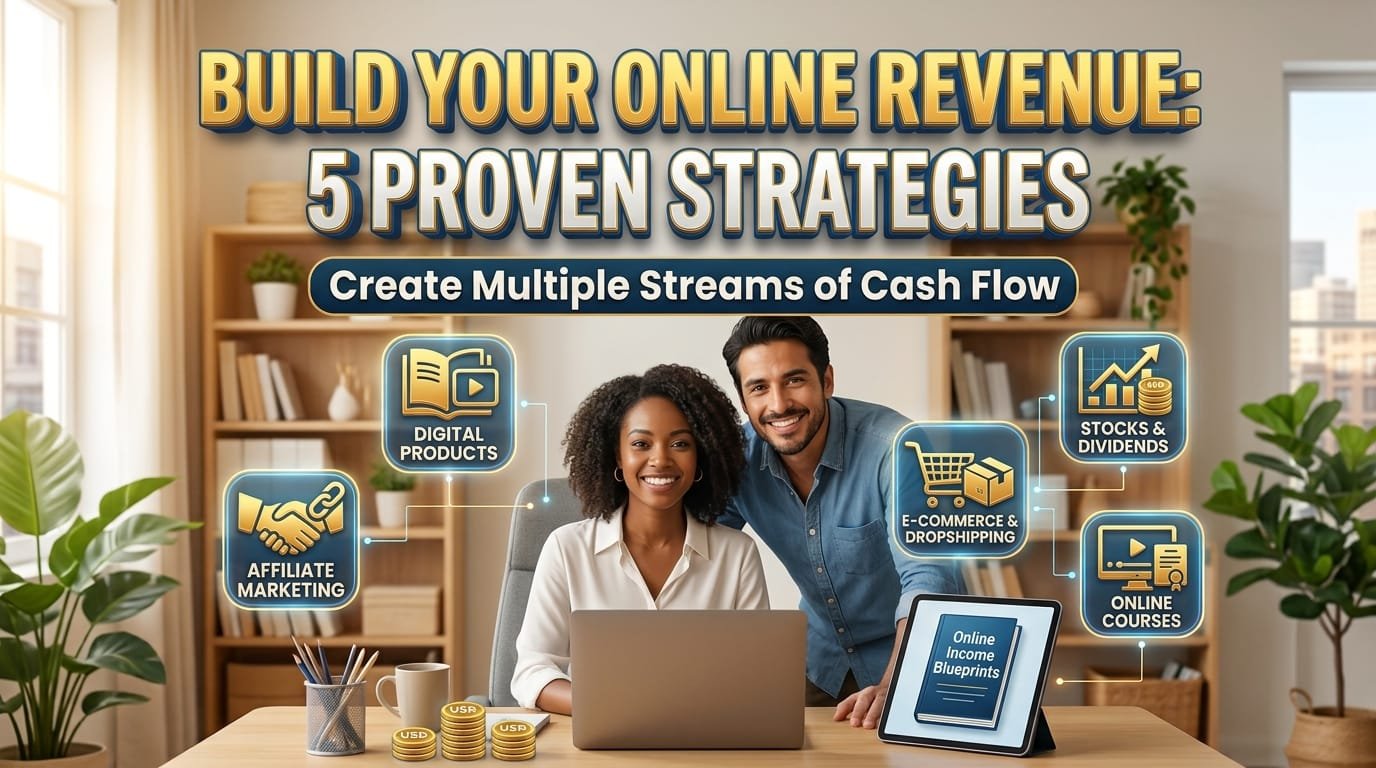
Active Income vs. Passive Income
| Active Income | Passive Income |
|---|---|
| You trade time directly for money | You build or own an asset that can generate income |
| Examples include jobs and freelancing | Examples include digital products, investments, and rental property |
| Income is closely tied to hours worked | Income can continue after the initial work |
| Stopping work usually stops the income | Income may continue, although it can decline |
| Scaling often requires more working hours | Some assets can scale without equal increases in time |
Neither type is automatically better. Active income is often the fastest way to increase your cash flow because you’re paid directly for your skills and time.
Passive income is attractive because it can eventually reduce the connection between your time and your earnings. For many people, the smartest strategy is to use active income to fund and build passive assets over time.
🎁 I’m Giving Away My Complete Guide for FREE!
Reading about these ideas is just the starting point. To help you actually execute them step-by-step, I’m giving away my “Passive Income Ideas” eBook completely FREE!
👉 [Download My Free “Passive Income Ideas” eBook Here]
Frequently Asked Questions
Passive income is money generated from an asset, investment, product, or system without requiring the same ongoing time-for-money exchange as a traditional job. It usually requires significant upfront work, money, or both.
The simplest passive income definition is income that continues to be generated with relatively little ongoing involvement after the initial asset, product, or investment has been created.
It depends on your resources. Digital products and printables can be good low-cost options. Blogging and YouTube can work well for people willing to build an audience over time. Dividend investing and rental income are more appropriate for people who already have capital.
Start by creating something useful for a specific audience. That could be a digital product, e-book, website, video library, software tool, or other asset. Then focus on getting traffic and customers before trying to automate everything.
Simple digital products and printables are among the easiest places to experiment because startup costs can be very low. You can create them with relatively accessible tools without needing inventory or advanced technical skills.
Final Thought
The best passive income ideas aren’t necessarily the ones that look impressive on social media. They’re usually much more ordinary. A useful template.
A well-written guide. Website that answers questions people search for. Small software tool that solves an annoying problem. A carefully built investment portfolio. A rental property that has been properly managed. None of these are overnight success stories.
They are assets. And assets take time to build.
If you’re starting today, I’d forget about trying to create ten passive income streams at once. Pick one idea that fits your current skills, budget, and schedule. Build something genuinely useful. Get it in front of real people. Learn from the response and improve it. That’s not the glamorous version of passive income. It’s the version that has a much better chance of actually working.